
Monarchs will be heading north soon, if they're not already! Get ready to monitor them as they return from their winter stay in Mexico. Check out Journey North and the Monarch Larva Monitoring Project, or visit the Monarch Joint Venture's Community Science page for more opportunities.
The Monarch Larva Monitoring Project team hosts live virtual trainings each spring. Upcoming workshops will take place on February 26 for sites in the southern U.S., and on May 7 for sites in the north. There is also an opportunity for an asynchronous course from March 2-27 that includes some live meetings with instructors.
It's also a great time to think about habitat creation. Monarch Joint Venture has lots of great suggestions for preparing habitat that will be ready for monarchs when they return.
Monarch update, February 2026
Since early November, most monarchs in the eastern North American migratory population have been overwintering in Central Mexico, waiting for the environmental cues that will signal that it’s time to move back north. Even before the monarchs leave, mating will begin, and they’ll continue to mate, and the females will lay eggs as they head north, through northern Mexico and into Texas, before spreading into approximately the southeastern quarter of the U.S.
A team from CONANP (Comisión Nacional de Áreas Naturales Protegidas – the National Commission of Natural Protected Areas) and the World Wildlife Fund-Mexico measures the area occupied by monarchs throughout the winter, and we’ll soon learn what they’ve found for the winter of 2025-2026. Until then, I don’t have a detailed population update, but I will share reflections and photos from my recent trip to the Monarch Butterfly Biosphere Reserve (MBBR) (Reserva de Biosfera de la Mariposa Monarca, RBMM).
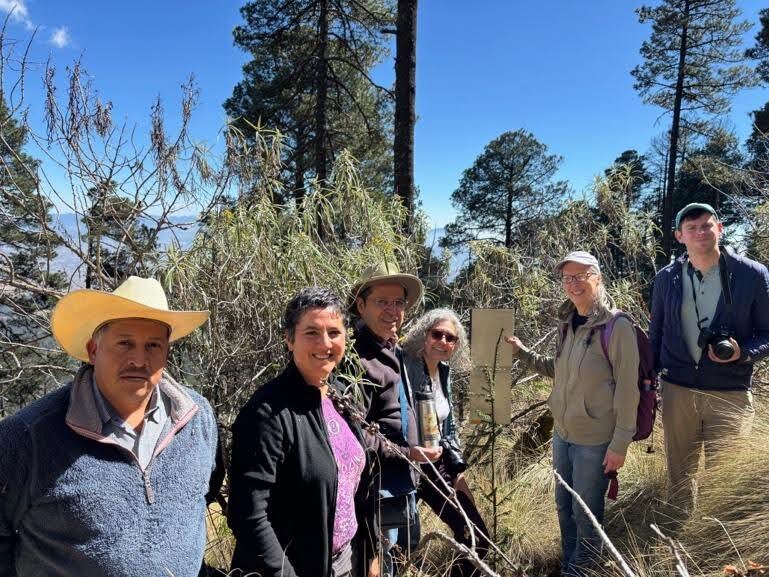
Because climate change may affect long-term survival of the forests used by monarchs, Dr. Cuauhtémoc Sáenz-Romero is studying assisted migration of oyamel fir trees (key trees used by wintering monarchs). This photo shows a planted three-year-old oyamel, taken at a site at 4,000 meters (over 13,000 feet) above sea level on the eastern slope of Nevado de Toluca, above the current range of the species.
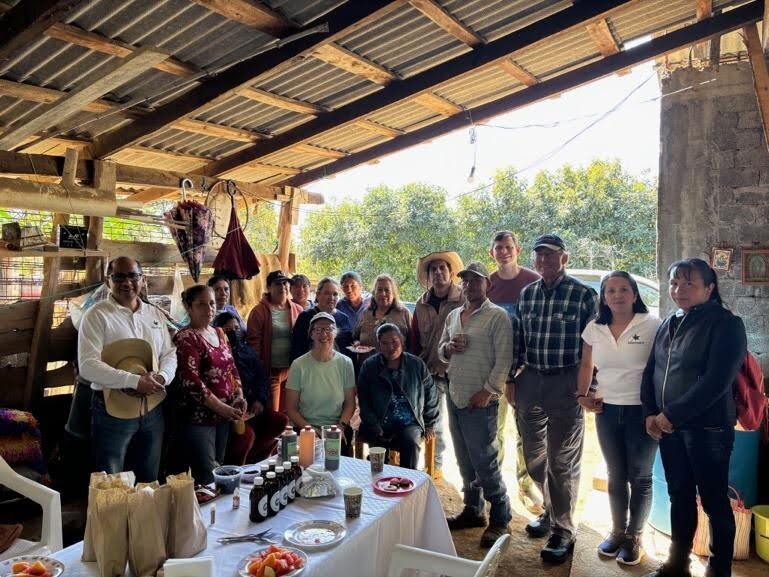
Most of the land on which monarchs overwinter is owned by Ejidos (community groups that collectively own and maintain agricultural and forested land) and indigenous communities. Conservation of the wintering sites, key to the long-term survival of the phenomenon of monarch migration, depends on working closely with these communities. Mexican non-profit Alternare works with Ejidos and Indigenous communities within the MBBR, supporting sustainable development and forest conservation. We met with women from the community of Zirahuato to learn about the many ways that Alternare is supporting sustainable living and development in their community. Alternare staff members Ysmael Venegas and Viridiana Gomez Tapia are in the white shirts in the photo above.
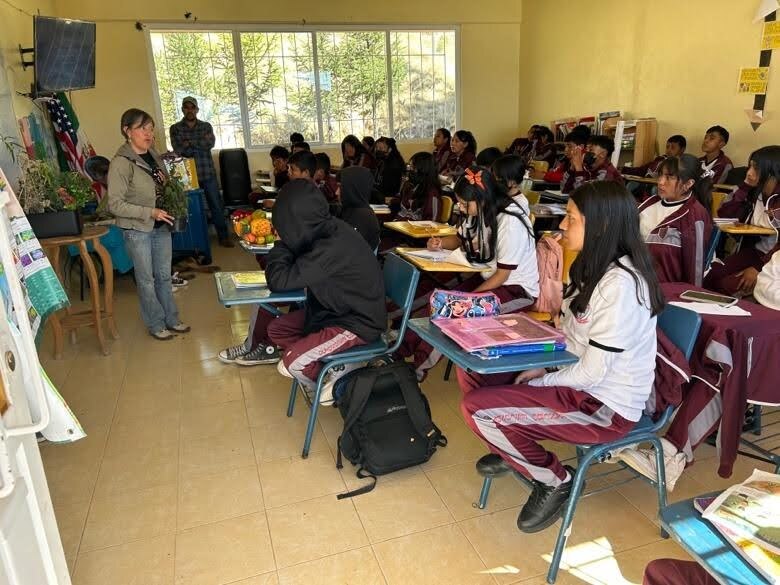
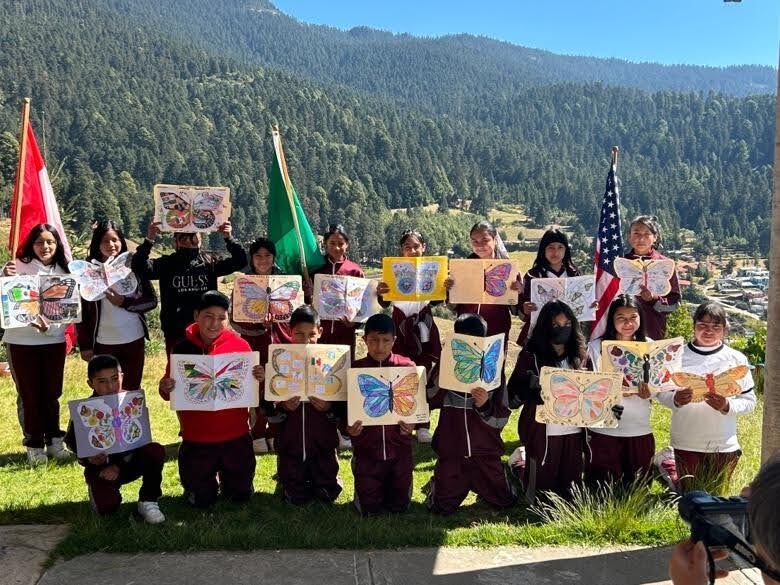
We also visited a middle school right next to El Rosario, one of the largest monarch sanctuaries, where Estela Romero taught a lesson (top photo) and distributed paper butterflies made by schoolchildren from the U.S., part of the Symbolic Migration Project (below).
Estela’s lesson included a summary of monarch biology and the importance of pollinators in general, and students asked me some great questions about monarchs in the spring, summer, and autumn. One of my favorite questions was how winter monarchs can live so much longer than summer monarchs. They can do this because it’s relatively cool (but not freezing) for most of the winter, slowing their metabolism; they’ve stored up a lot of energy in the fat they made from food they consumed as larvae and sugars from nectar they consumed during the fall migration; and they aren’t putting energy (yet) into mating and producing eggs. All three of these factors help them reserve energy for a longer life.
Eight of the students have parents or siblings working as guides in the monarch sanctuary. Alternare is also working with this school on land conservation activities.
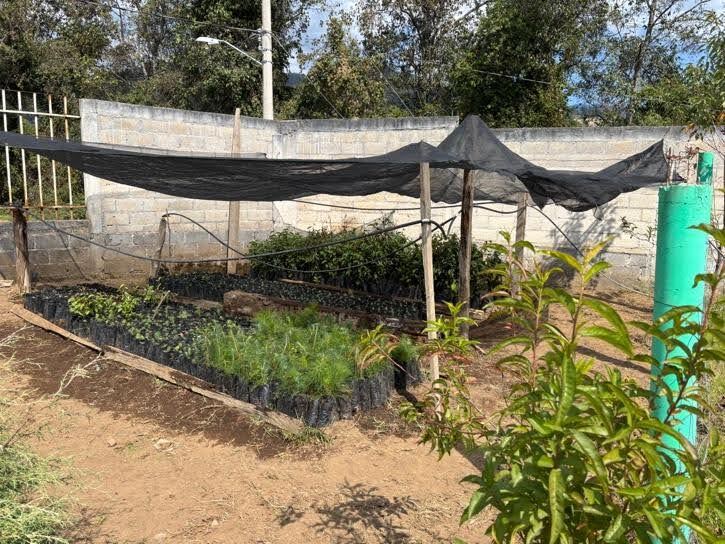
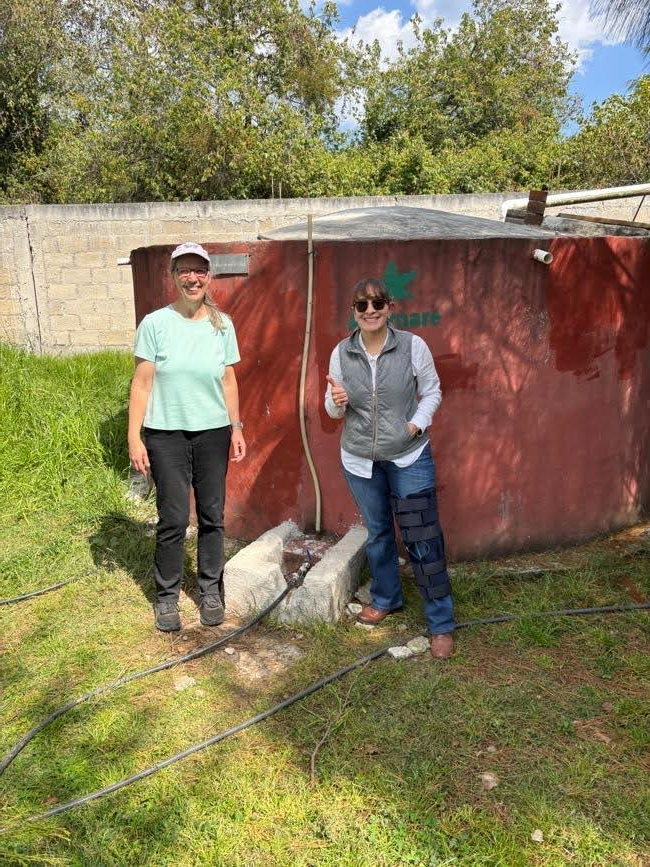
This tree nursery at the high school in the Francisco Serrato Community, as well as a cistern that captures water used at the school, were created in partnership with Alternare. Unfortunately, the students were not in class the day we visited, but principal Jazmin Elizabeth Garfias Gomez (right in the cistern photo, who is also the English and social studies teacher) told us a lot about the curriculum and their work with Alternare.
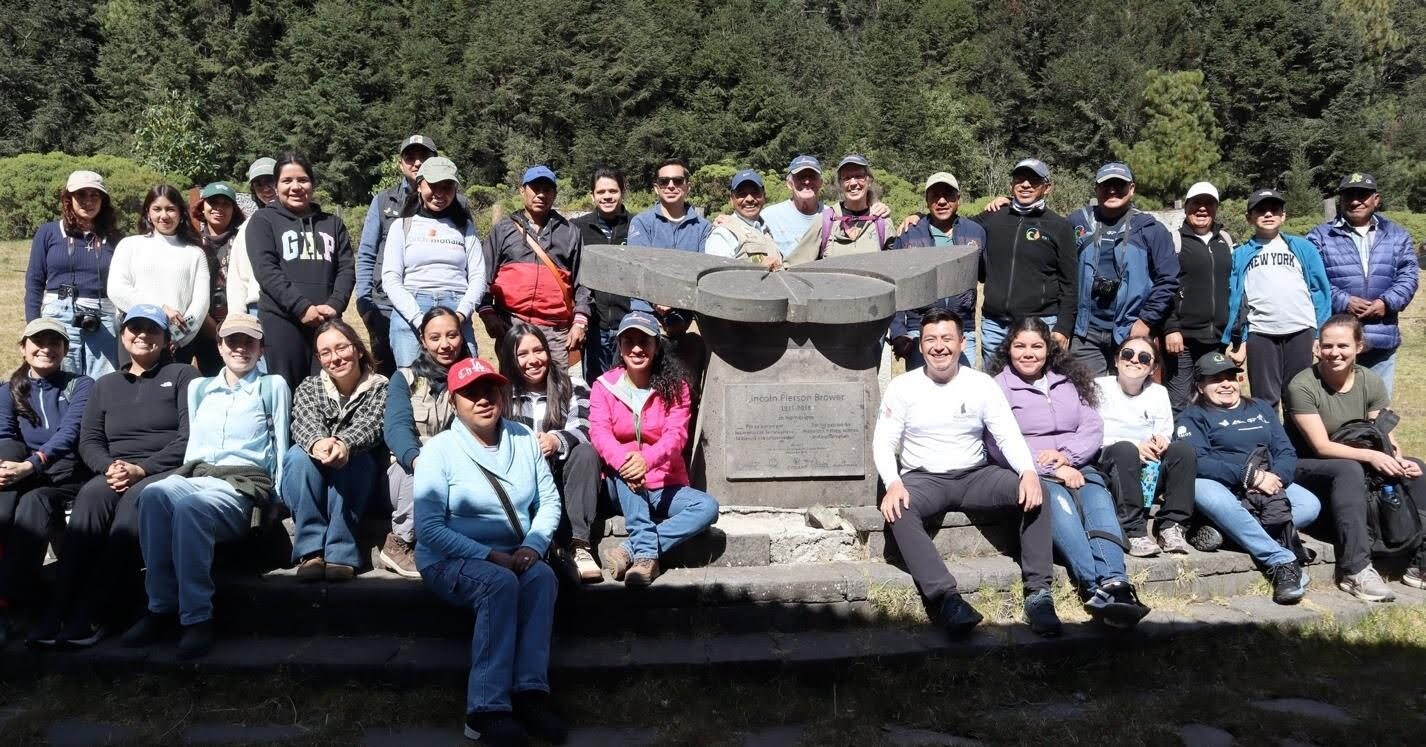
We spent a day at Sierra Chincua with an amazing group of young conservationists who are part of Red CATA (Comuniaria de Aprendizaje en Turismo Alternativo/Community Learning in Alternative Tourism Network), starting at a statue of a monarch honoring monarch researcher Lincoln Brower. Red CATA is a project of FOCEN, the Fondo de Conservación del Eje Neovolcánio (the Neovolcanic Axis Conservation Fund).
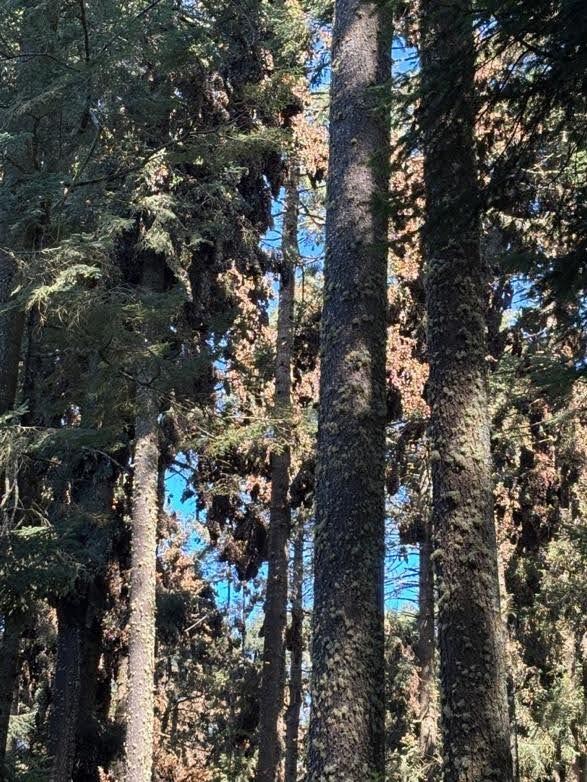
And of course, we saw monarchs! Perhaps one that started in your yard is in this photo from the El Rosario Sanctuary!
All of the projects described here are supported by the Monarch Butterfly Fund.